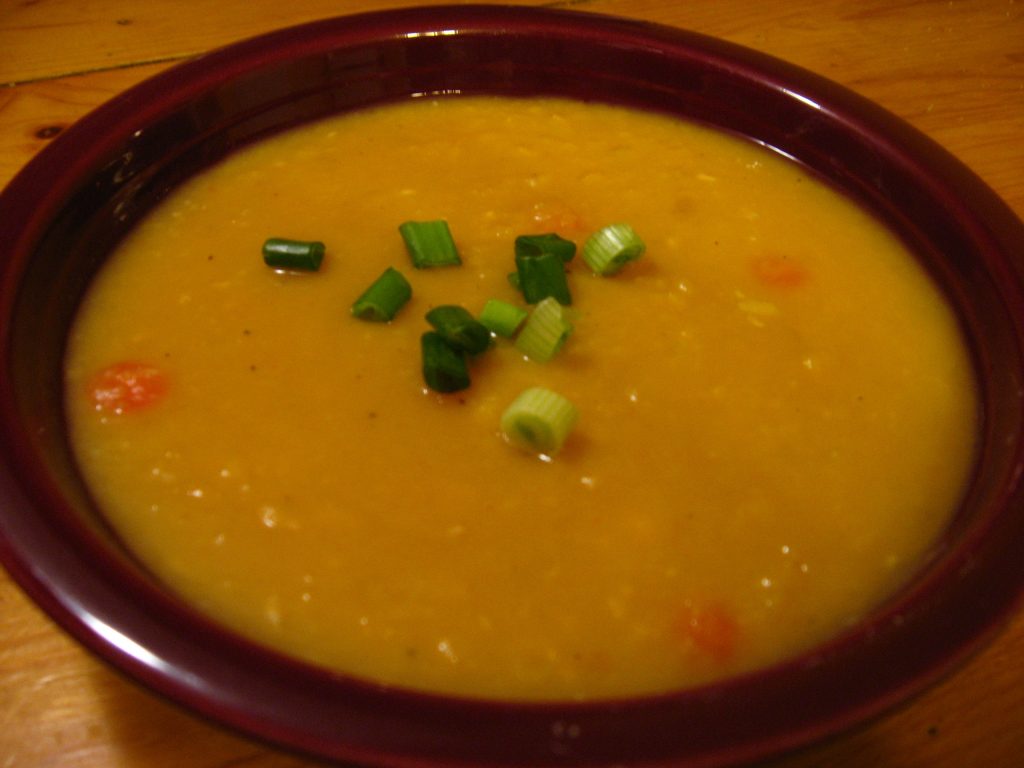
Walk into almost any lunch restaurant, school canteen or traditional restaurant in Sweden on a Thursday, and you will likely see the same two words chalked on the board: ärtsoppa and pannkakor, pea soup and pancakes. For a visitor, the sheer consistency of it across the whole country is the first surprise. Here is what the tradition actually is, where the story behind it comes from, and how to enjoy it without any pork, egg or milk.
A weekly habit, not a one-off event
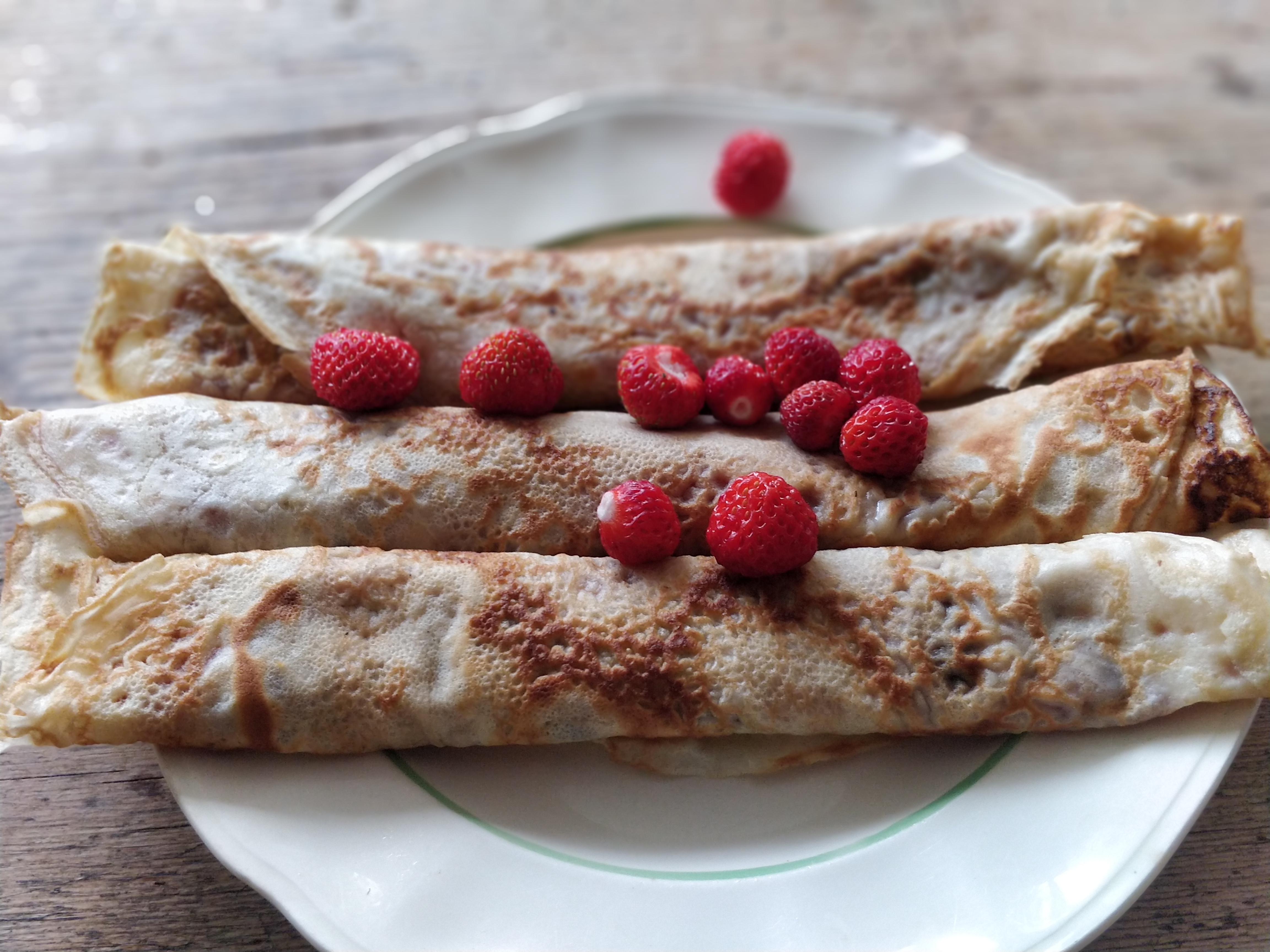
The Thursday meal has two parts. First comes a thick, bright yellow soup made from dried peas, traditionally simmered with a piece of pork and seasoned with mustard. It is followed by thin, crepe-style pancakes, usually rolled or folded and eaten with jam. Isof, the Institute for Language and Folklore, the government agency that runs Sweden’s food culture archive matkult.se, writes that pea soup is still served on Thursdays in many lunch restaurants, schools and homes. News55 adds care homes for the elderly and parts of the Swedish Armed Forces to that list, and notes that many lunch restaurants still put the dish on the board every Thursday. Menus vary from one kitchen to the next, so treat it as a strong nationwide habit rather than a rule every single restaurant follows.
Where the story comes from (it depends who you ask)
Ask a Swede why Thursday specifically, and most will give you the same explanation: in Catholic times, meat was off the menu on Fridays, so people ate something substantial the day before to get through the fast. That is also the account given by Isof, which states plainly that “under den katolska tiden var fredag en köttfri dag” (during Catholic times, Friday was a meat-free day) and that the hearty Thursday meal grew out of that. The related Levande kulturarv heritage register, run jointly by the six government agencies responsible for the UNESCO intangible heritage convention in Sweden, among them Isof and the Nordic Museum, calls it “probably” tied to the same Catholic fast, with peas and pork as a dish going back to medieval times.
That is the popular version, and it is worth treating as exactly that: the commonly repeated explanation, not a settled fact with a dated decree behind it. There is at least one documented, competing account. The Swedish-language entry on ärtsoppa cites a 1989 study by economic historian Mats Morell, Studier i den svenska livsmedelskonsumtionens historia: hospitalhjonens livsmedelskonsumtion 1621-1872 (pages 182 to 192), for the claim that the Thursday slot grew out of the meal regimes of Swedish hospitals and poorhouses from the 1600s onward. Västerås hospital, for one, served pea soup with pork or meat on Thursdays as early as 1620, and was still doing so in the 1730s. The same entry goes on, without citing Morell or any other source, to explain that public kitchens like these bought food in bulk once a year and therefore planned rotating menus far in advance, usually in two-week cycles, and that the same pattern later shaped regimental canteens and, once school lunches became universal in the 1950s, school canteens. On that reading, Thursday became the pea soup day less because of a fast the next day and more because a big, cheap, filling dish suited a fixed institutional rota. Both explanations point to the same medieval and early modern roots for the dish itself, but historians are not unanimous on why Thursday won out. Pancakes came along much later either way: Isof describes rounding off the soup with pancakes as “ett senare tillägg i traditionen” (a later addition to the tradition), Levande kulturarv dates the pairing to the 18th century, and News55 puts the first records at the end of that century, when thin wheat-and-egg pancakes were still a luxury found mainly in well-off homes.
The traditional version is not vegan
Two ingredients make classic ärtsoppa och pannkakor unsuitable for a plant-based diet. The soup is usually simmered with a piece of pork, often a ham hock or side pork, which gives the broth its savoury depth. The pancakes are a separate problem: a standard Swedish pannkaka batter is built on wheat flour, eggs and dairy milk, and the meal is frequently finished with whipped cream on the side. None of that needs to stop you from having the Thursday classic, since every part of it has a straightforward plant-based version, but it does mean you cannot assume the dish on a traditional menu is safe to order without asking.
Making it vegan at home
Yellow split peas are already a plant, so a fully vegan pea soup mostly means swapping out the pork for something that still brings smokiness and body. ICA’s vegan pea soup with smoky mushroom does exactly that: dried yellow peas are soaked and simmered with onion, vegetable stock, thyme and marjoram until soft, then finished with a spoonful of Swedish mustard and a scoop of mushrooms fried with a touch of liquid smoke standing in for the pork. The mustard and the smoky mushroom together recreate the flavour most people expect from the traditional bowl.
For the pancakes, Wonder Vegan’s recipe replaces both the eggs and the dairy with plant milk (oat or soy work well) and vegan butter or margarine, both in the batter and in the pan. The batter is whisked together, left to rest for a few minutes so the flour hydrates properly, and then fried thin in a hot pan the same way as the dairy version. Roll them with jam, or, if you want the full traditional plate, keep a tub of oat-based whippable cream nearby for the topping.
What to check for if you order it out
Sitting down at a traditional restaurant on a Thursday is still a good way to experience the ritual, as long as you ask the right questions before the bowl arrives.
Ask what the soup is simmered with
The stock itself may carry pork even if you cannot see any meat in the bowl. Ask “Är soppan gjord utan fläsk?” (is the soup made without pork) before you order.
Assume the pancakes have egg and milk
A standard pannkaka batter contains both. Ask for “pannkakor utan ägg och mjölk” or whether a plant-based batter is available.
Watch the side of whipped cream
Vispgrädde is a common topping for the pancakes. Ask for it “utan grädde” (without cream) or request oat-based cream instead.
Punsch may turn up alongside the soup, served warm
A small glass of sweet Swedish punsch, served warm, is a traditional accompaniment. The Swedish-language entry on ärtsoppa notes that there is no documented explanation for the pairing, and Levande kulturarv describes hot punsch as something drunk mainly on special occasions by clubs and student societies rather than at an ordinary Thursday lunch. Punsch is an arrack-based liqueur, but recipes differ between producers, so check the label or ask if a plant-based drink matters to you.
If a kitchen cannot confirm the soup and pancakes are free of pork, egg and dairy, a fully plant-based version at a dedicated vegan or vegetarian restaurant is always the safer bet. The worldwide directory HappyCow is a good way to find one nearby, and our guide to eating plant-based at traditional restaurants covers the general phrases and habits that make ordering easier anywhere in Sweden.
Why it is worth trying
Ärtsoppa och pannkakor is one of the few Swedish food traditions that are genuinely tied to a specific day rather than a season or a holiday, which makes it an easy, low-stakes way to feel part of local life during a visit. Cooked at home with yellow split peas, plant milk and vegan butter, it is also one of the more affordable and filling meals you can make for yourself while travelling. Pair it with our Swedish vegan glossary before you go looking for it on a menu, or explore vegan Stockholm and vegan Gothenburg for more city-specific guides.
Last fact-checked: 29 July 2026